
Stop Playing God
Jesus' most foundational teaching

“Blessed are the poor in spirit, for theirs is the kingdom of heaven.”
All of the beatitudes are vital attributes of what it means to faithfully walk with God, but the first beatitude is foundational. Without it, you won’t understand the other seven.
Johannes Baptist Metz, a Jesuit priest, wrote about the importance of the first beatitude, “without it there can be no Christianity, and no imitation of Christ.”
When someone makes an all-or-nothing statement like that, it’s best to pay attention.
This priest is claiming that the gospel itself is on the line here in Jesus’ first sentence in his sermon on the mount.
To be poor in spirit is to stop playing god and entrust yourself to the God who is already at work for your good.
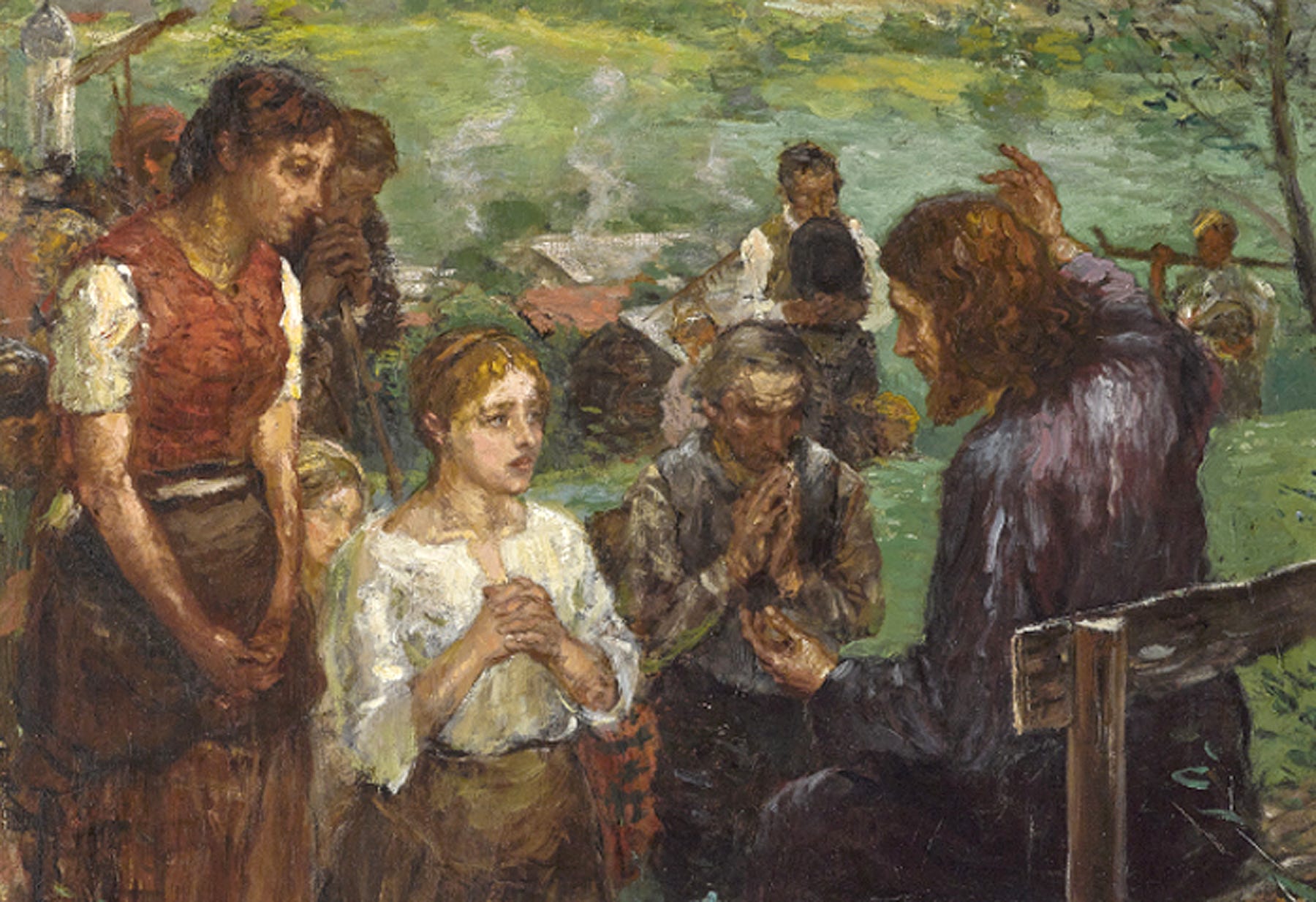
At 17-years-old, Arthur was a mystery to his parents.
He hardly said a word to anyone, except when he lost his temper, then no one could get him to be quiet.
At family parties, he’d glue himself to the wall, refusing to engage in any of the games or conversations.
At school, he went unnoticed, keeping mainly to himself, always wearing black jeans, and a black hoodie pulled over his head.
His bright red hair was cut short enough that you could see the pale scalp underneath it.
His light blue eyes were like vortexes that could transport you to another dimension.
When he entered the cafeteria, conversations quieted, eyes stared too long, and he walked directly to the table where no one else sat.
Isolation put him in the driver’s seat of his life.
Yet, it also left everyone around him feeling bewildered, thinking to themselves, “What is up with Arthur?”
His parents and classmates remembered a time when Arthur could make his whole class laugh without even trying.
They remember an Arthur who was engaged in life, ready for whatever came next.
Fast forward a few months: Arthur is sitting in on a hard pew with his mom and dad sitting on either side of him.
The preacher is going on and on about Jesus’ new command to love one another.
Arthur can’t help but think to himself, “Jesus had no clue what the word “new” meant. Everyone knows we need to love one another.”
What the pastor said next though, sounded like nails on a chalkboard to Arthur’s ears, “Loving one another involves being vulnerable enough to be loved.”
If you want to love others, you need to open yourself up to others’ love.
No, Arthur thought to himself.
Absolutely not.
I still remember all the nightmares that came night after night.
I still remember the way my hands shook, but my body felt numb.
I know what happens when I am vulnerable.
Vulnerability is what got me hurt in the first place.
If Jesus expects me to be vulnerable, then I’m done.
No way, God, am I opening my heart up to that again.
If that means love is out of reach, then so be it.
No one is going to tell him what to do.
His way is the only way he believes will keep him safe.
He can’t bring himself to trust others, let alone God.
From the outside, Arthur looked poor in spirit, but he wasn’t.
He had his guard on.
He was armored.
And armor may keep pain out, but it also keeps the kingdom out.
All of us can wall ourselves off from God and his counter-intuitive commands.
We do it because someone we trusted betrayed us.
We do it because we lashed out at someone who only wanted the best for us.
We do it because we repeatedly self-sabotage the good we have going on in our lives.
Like a mason carefully laying one brick on top of another, sealing the building from inclement weather, we seal our hearts off from God.
Like Arthur, we convince ourselves that we’ve built the walls so that we are protected, impenetrable from a world of pain.
Yet, as we place brick upon brick, our world doesn’t grow, it begins to shrink.
We become more isolated, alone, and afraid.
When a friend invites us to go on a walk, we say, “Maybe next time.”
When a loved one asks us how we are really doing, we say, “I’m fine” and refuse to open up.
We choose self-protection and self-preservation over vulnerability and love just about every time.
Our hurts, hangups, and habits prevent us from opening ourselves up to God’s way of healing, humility, and holiness.
But Jesus proclaims, there is another way: “Blessed are the poor in spirit, for theirs is the kingdom of Heaven.”
To be “poor in spirit” is to readily admit that your ways don’t work, and they never will.
It’s to say, I’ve tried playing god in my life, but it never gets me where I need to go, and it never will.
It’s an open confession that your hurts, hangups, and habits prevent you from opening yourself up to God’s way of healing, humility, and holiness.
It’s admitting whole-heartily that unless God shows up, unless he reveals to me how I ought to live, then I’ve got no chance at finding true peace, grace, and love.
The poor in spirit are unapologetically humble.
They’ve given up on the American spirit of pulling yourself up by your bootstraps.
They’ve quit faking it till they make it.
They’ve accepted the only thing they can be sure of is Jesus’ words in John 15:5, “Apart from me you can do nothing.”
Now before you go tell your friends, “Let go and let God.” I am not encouraging you to neglect personal responsibility.
The poor in spirit are not people who just let life happen to them.
Neither are they people who think that they are in complete control of life.
The poor in spirit whole heartily believe that the sovereign God has chosen to bring about his will through the actions of human beings.
In other words, God is not a puppet master.
But he is not an absentee father either.
Some of us live like everything depends on us.
Others of us live like nothing does.
Jesus refuses both of these narratives.
In Jesus, God does not bypass human responsibility,
and he does not abandon us to it either.
God takes responsibility with us.
The poor in spirit joyfully acknowledge God’s control, and that he works through them to bring about his work in the world.
This is exactly what Jesus did throughout his ministry.
He took responsibility for his actions, but always declared that his Father or his Spirit was working through him.
John 12:49 “For I did not speak on my own, but the Father who sent me commanded me to say all that I have spoken.”
Matthew 3: Jesus was anointed with the Holy Spirit to do his ministry.
Jesus is perfectly human and God.
It is he who embodies the beatitudes perfectly.
During Arthur’s freshmen year of college, he sat across from his new mentor as they both picked at their cafeteria food.
He wanted to tell his mentor the truth, but his words felt glued inside his mouth.
But, then, finally, he got it out.
It was a stranger who hurt him all those years ago.
He didn’t know why he trusted him.
Arthur just knew that he had never been the same since.
His belief in humanity fractured.
His belief in God disintegrated.
His belief in himself shattered.
So for years, he bottled it up, feeling like he couldn’t trust anyone, not even himself.
But as he shared all this with his mentor, his countenance changed.
He was smiling. Really smiling.
He finally let go of the thing that had weighed his spirit down for so long.
He became “Poor in spirit.”
He let go of control.
He stopped playing God.
He opened himself up to a way other than his own.
And slowly, over years of healing, he began to see that God had been with him all along, even when he couldn’t tell.
That it was God who gave him the courage to finally tell the truth.
It was God who gave him the space he needed to process the trauma.
He still wished his suffering had never happened, but the more his mentor and other friends walked alongside of him, the more he realized that he may have felt like he had nothing, but the whole time, God was giving him exactly what he needed.
Arthur truly became poor in spirit.
Where are you still holding onto control?
Where have you armored yourself and called it wisdom?
What’s holding you back from unapologetic humility?
Blessed are the poor in spirit, not because they have nothing, but because they finally receive everything as a gift.